
Collio vino da uve autoctone Riserva Bio
Typicality and territoriality are immediately apparent. Complexity on the nose with both floral and yellow peach and bergamot notes, which continue arm in arm on the palate, warm, enveloping, savory and mineral. The balance of flavors that characterizes the terroir. A wine that possesses a close connection with history, people and territory, continuing the centuries-old tradition of Bianco del Collio, which has always been produced with the local varieties Ribolla Gialla, Malvasia Istriana and Tocai Friulano. Separate harvests with the predominance of the latter and a long stay on yeasts with maturation in steel only. Terraced vineyards with Friulano and Malvasia from the east, Ribolla Gialla from the west, on the highest part of the slope.
Tasting profile
- Taste-aroma intensity4
- Savouriness4
- Acidity and freshness4
- Persistence4
- Alcohol3
- Softness3
How to read it
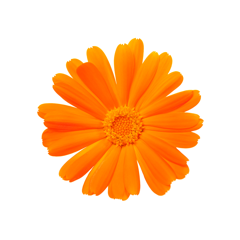
Taste-aroma intensityCalendula
The power and clarity of the aromas: how much the wine speaks to the nose.
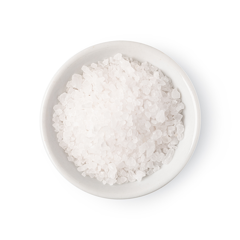
SavourinessSalt
The salty, mineral note that makes the wine savoury and dynamic.
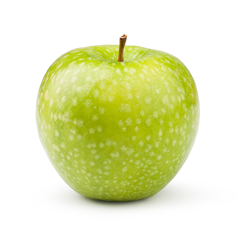
Acidity and freshnessApple
The freshness that cleanses the palate: more acidity, a livelier sip.
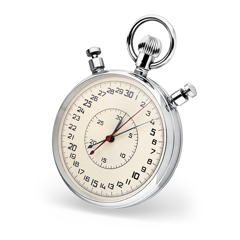
PersistenceStopwatch
How long the flavours linger after the sip: the length on the palate.
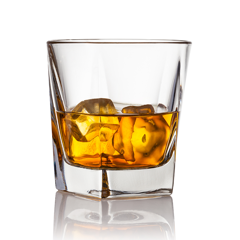
AlcoholWhiskey
The warmth and body of alcohol: the higher it is, the warmer and fuller the wine.
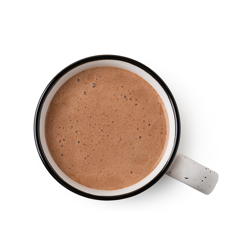
SoftnessHot chocolate
The enveloping roundness on the palate, without edges — soft as hot chocolate.
The producer
Marcuzzi Officina Viticola
La carezza del buccia per imprimere il Collio. Scopri questa intima azienda vitivinicola di San Floriano del Collio.
...The winery is situated at the top of a small hill covering about 5 hectares in San Floriano del Collio, known by the Slovenian place name “Çujevi,” meaning “stump.” To the north lies the border with Slovenia, marked by old yellow and red military signs indicating the remaining meters to the border, as well as by boundary markers dating back to the 1950s. On the other sides, the vineyard-covered slope descends via terraces and an older system of retaining walls. The grape varieties grown to the east are Friulano, Malvasia, and Pinot Bianco; to the southeast, Pinot Grigio; and to the southwest and west, Cabernet Franc, Ribolla Gialla, and Sauvignon, respectively. The label itself is intended to represent the various vineyard parcels, grouped by grape variety, all characterized by slopes depicted through raised contour lines. The stylized hill faces north, as indicated by the symbol in the lower right corner. The red line indicates the border, which—despite its significant historical importance—has been depicted as a dotted line to highlight that it is merely an artificial geographical division of the Collio/Brda region, which has always been united geologically, environmentally, and morphologically. My goal is to create “Living Wines” that change and evolve over time and vary from vintage to vintage depending on what nature offers. To achieve this, I strive to extract as many terroir characteristics as possible from the grapes, while respecting the unique qualities of each grape variety. I therefore allow all musts to undergo light skin contact, which can last from a few hours to a few days. Depending on the maceration time, this can take place directly in the press with whole clusters; however, if the time exceeds one night, the grapes are destemmed and placed in fermentation vats. In the latter case, fermentation is spontaneous, using indigenous yeasts. For some wines, to enhance their elegance, we use cryomaceration at a temperature below 12 degrees, relying solely on water-cooled jackets inside the stainless steel tanks; while for other wines, fermentation begins with the skins left in the tank at a controlled temperature to extract tannins and more pronounced characteristics. In terms of winemaking, I receive invaluable professional support from winemakers Erika Barbieri and Alberto Faggiani, who have guided the development of my winemaking journey with seriousness and precision, selecting the most appropriate techniques year after year to achieve the desired final result.